
Very few overseas projects are bought from a single factory. A villa might need custom kitchens from one maker, sofas from another, lighting from Guzhen, sanitary ware from a ceramics supplier and flooring from somewhere else again. Shipped separately, that is five sets of freight charges, five sets of export documents and five deliveries to receive at the other end, often weeks apart.
Consolidation solves this: goods from every supplier are gathered in one warehouse in China, checked, packed and loaded into one container. This guide explains how consolidation works step by step, what can go wrong, and what to agree with your suppliers so that it runs smoothly.
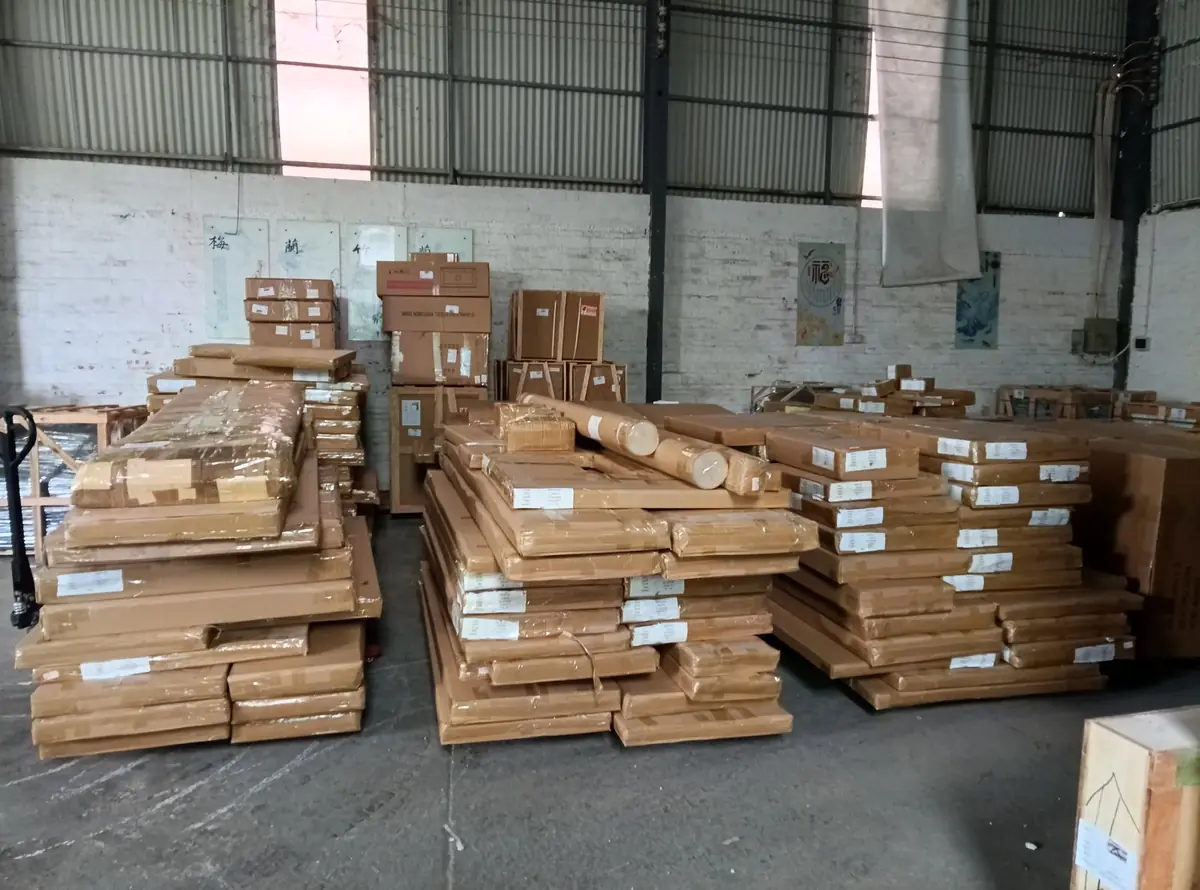
Why consolidate?
- One shipment, one set of documents. One commercial invoice and packing list per shipment, one customs clearance, one delivery.
- Better use of container space. Mixed goods can be loaded so that heavy items sit low and fragile items are protected.
- One inspection point. Everything passes through the same warehouse, so quantities and condition are checked before loading.
- Easier receiving. Your installer or contractor gets everything at once, labelled by room or item.
Step 1: Agree delivery terms with each supplier
Consolidation starts at the purchase order. Each supplier needs to know:
- The delivery address of the consolidation warehouse in Foshan, and the latest delivery date
- Packing requirements: export cartons, corner protection, and whether a wooden frame or crate is needed
- Labelling: your order reference and the item or room on every carton
- A packing list with carton count, dimensions and gross weight
The latest delivery date should be set so that the slowest supplier does not hold up the whole container. If one item is running late, you will need to decide whether to wait or ship without it.
Step 2: Receiving and counting at the warehouse
When each delivery arrives, it is counted against the order and packing list and checked for transport damage. Discrepancies are reported straight away, while the supplier can still correct them, not when the container is already at sea.
Where goods have not yet been inspected, this is also a natural point for a quality inspection against the approved sample and drawings. See our quality inspection service.
Step 3: Extra export packing where needed
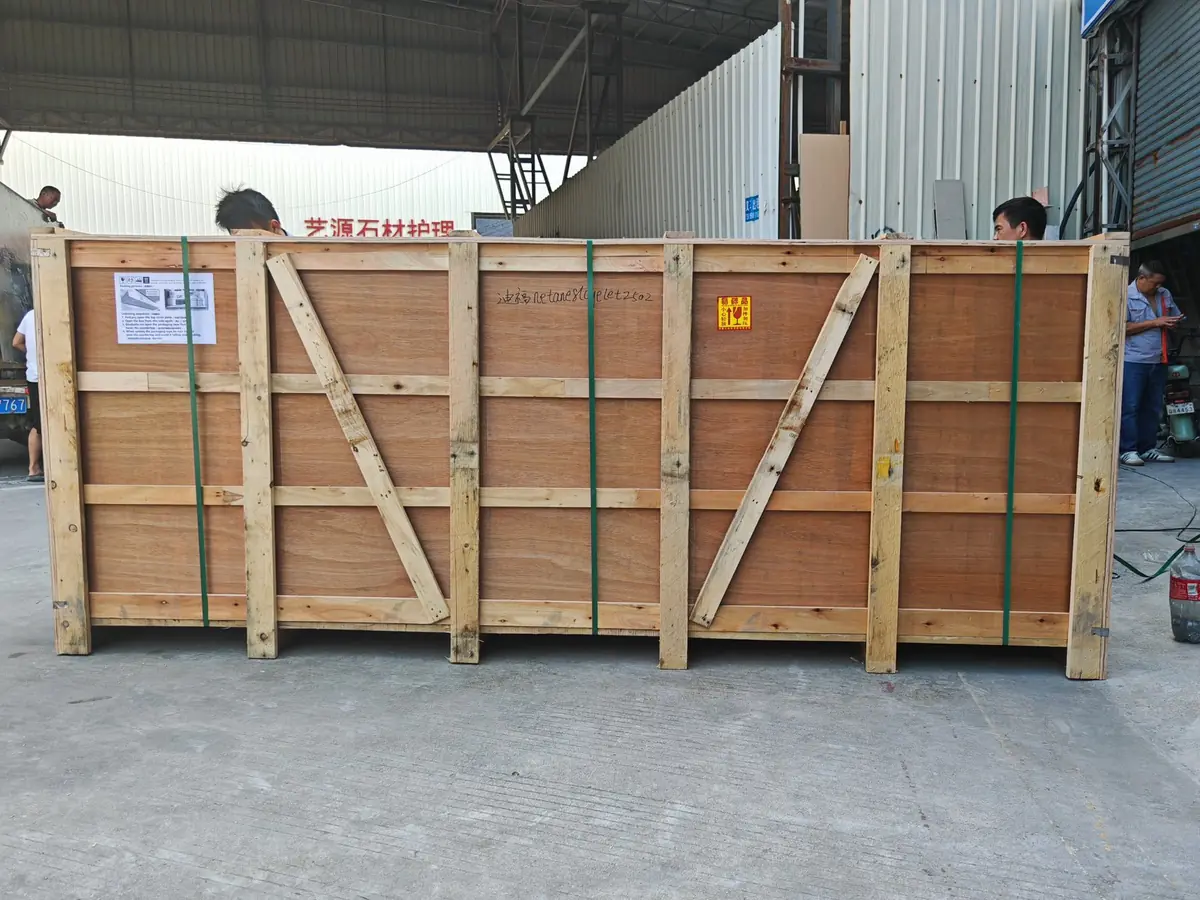
Supplier packaging is designed for domestic delivery as often as for ocean freight. Fragile or high-value items get extra protection: corner guards, foam, wooden frames or full wooden crates. Solid wood packaging for export must comply with ISPM 15: heat-treated or fumigated, and marked. Plywood and other processed wood are generally exempt.
Step 4: Plan the load
Before loading, estimate the total volume from the packing lists. As a rough guide, a 20ft container holds about 25–28 m³, a 40ft about 55–58 m³ and a 40ft high-cube about 65–68 m³ of cargo, depending on the shape of the goods and the packing. Furniture rarely fills a container perfectly, so leave a margin.
If your goods are well under a full container, ask your forwarder about LCL (less than container load) shipping, where your cargo shares a container with other shippers. It can cost less for small volumes but usually involves more handling.
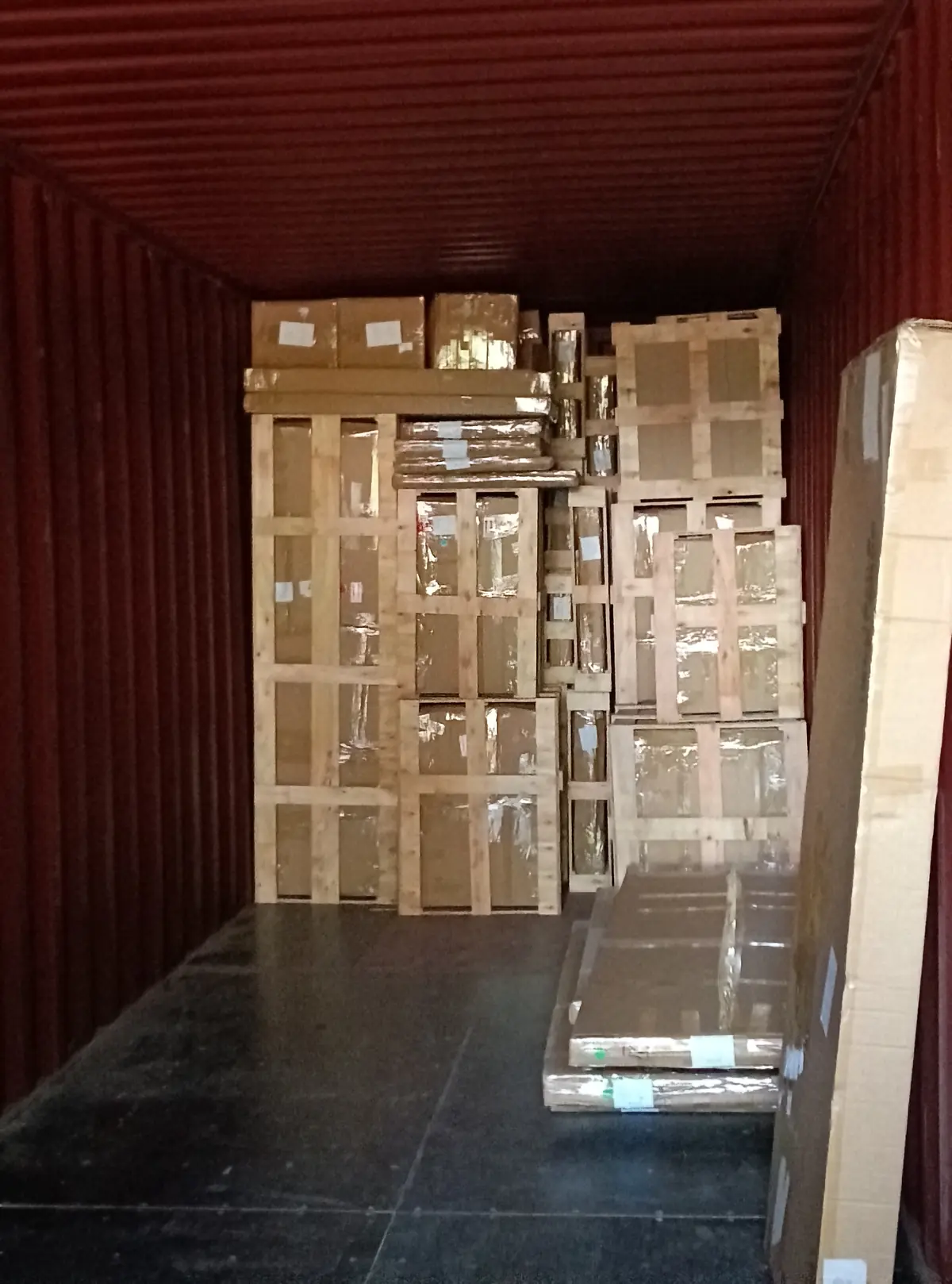
Loading is planned to use space well and keep heavy items low, with crated stone and glass secured against movement.
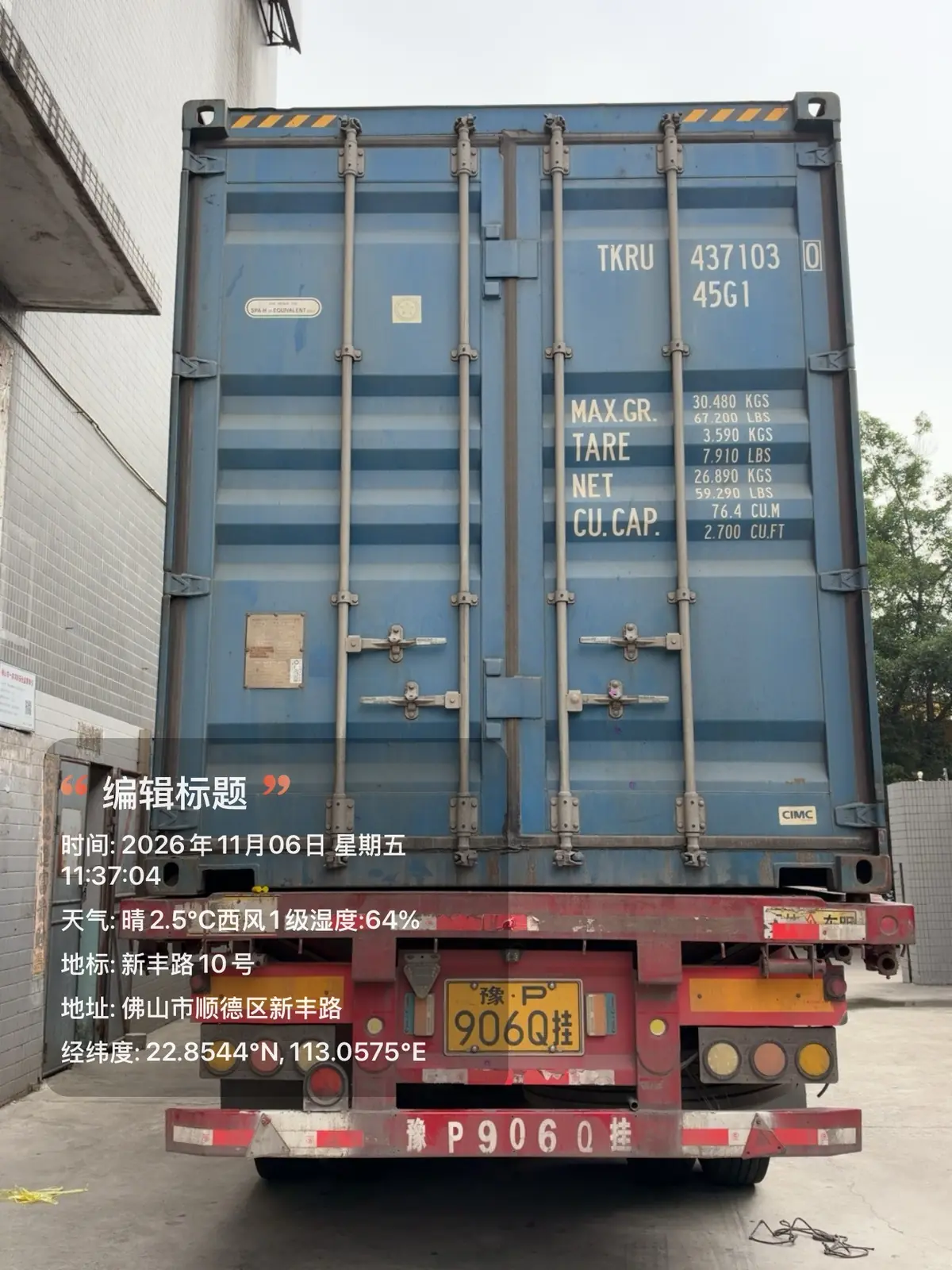
Step 5: Loading with photo records
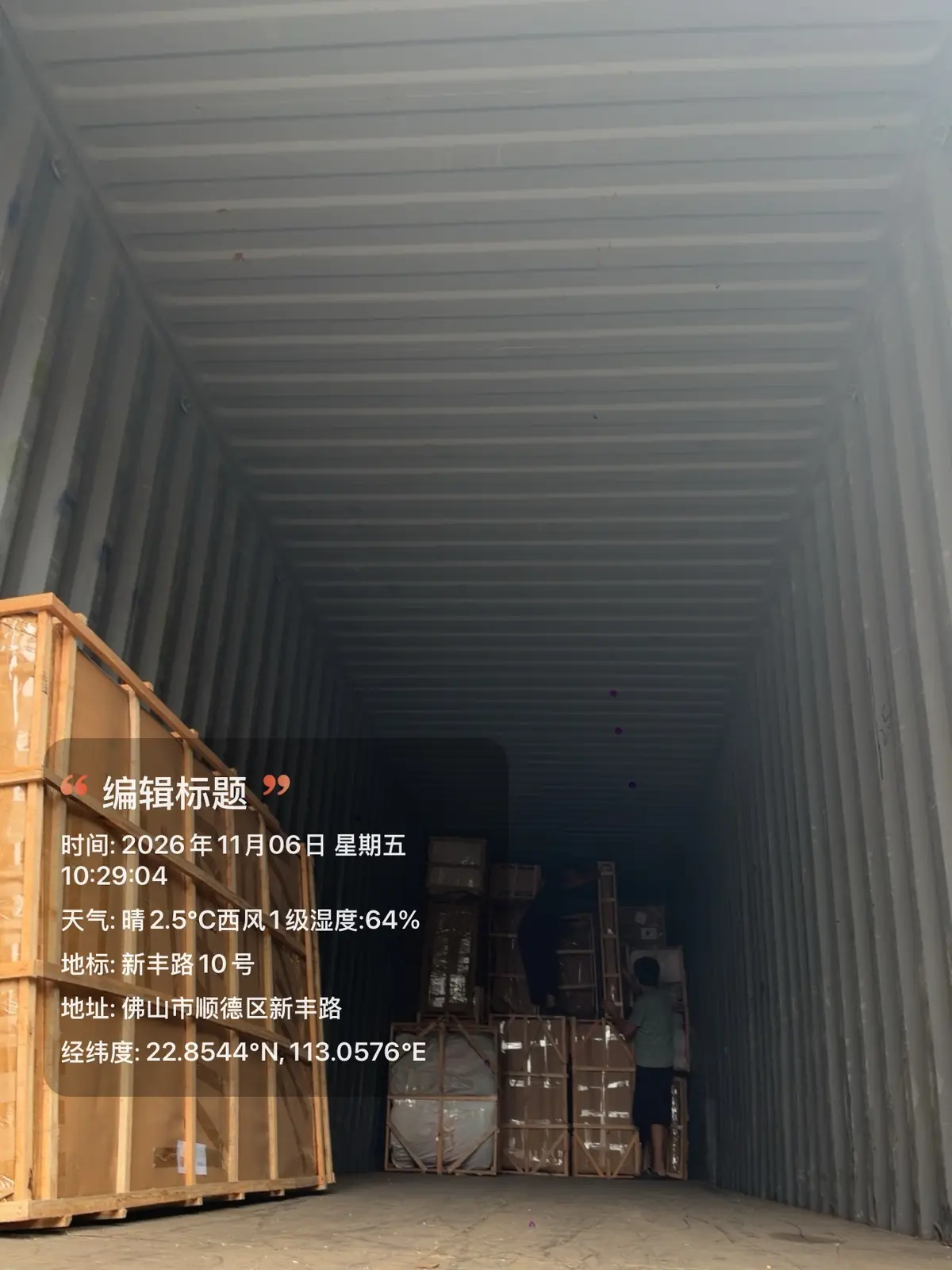
Progress is photographed so you can follow it remotely: the empty container, the load at intervals, and the final view before the doors close. Photos are your evidence of how goods left China if a claim is ever needed.
Step 6: Sealing and documents
The container is closed and sealed and the seal number recorded. The commercial invoice, packing list and other export documents are prepared with the freight forwarder, and goods ship on the agreed Incoterm, for example FOB, CIF or DDP. If you are not sure which suits you, read our guide EXW, FOB, CIF or DDP?
Common problems and how to avoid them
- A late supplier holds up everything. Set a firm warehouse delivery date and check progress during production.
- Cartons without labels. Insist on labels with your reference on every carton. Unlabelled goods are slow to count and easy to mix up.
- Volumes underestimated. Ask for carton dimensions in advance, not just the number of pieces.
- Weak domestic packing. Plan extra protection for anything fragile.
- Documents that do not match. The packing list must match what is actually in the container.
Who does this at XZH Group
XZH Trading consolidates goods for overseas buyers from any supplier: furniture, lighting, aluminium windows and doors, sanitary ware, flooring and soft furnishings. Our sister company Anna Collection makes custom kitchens, wardrobes and wall panels (xzhfurniture.com), and its loose-furniture line XZH Home makes sofas, dining sets and beds (xzhhome.com). All of these can travel in the same container as goods from other factories.
Frequently asked questions
Can you consolidate goods I bought myself from other suppliers?
Yes. Suppliers can deliver to the consolidation warehouse in Foshan, where goods are counted, checked for transport damage, packed where needed and loaded. Inspection can also be booked as a separate service, quoted per inspection.
How much fits in a container?
As a rough guide, a 20ft container holds about 25–28 m³, a 40ft about 55–58 m³ and a 40ft high-cube about 65–68 m³ of cargo, depending on the shape of the goods and the packing.
Which port is used for goods from Foshan?
Export cargo from Foshan commonly ships from Shenzhen (Yantian or Shekou) or Guangzhou (Nansha). Some cargo starts at Foshan river terminals and is transferred to a main port by barge. The forwarder chooses the routing based on schedule and cost.
How are your fees calculated?
Fees are quoted per project and agreed in writing before work starts. Factory prices, freight, insurance and duties are shown separately.
XZH Trading, Foshan Xuzhihui Trading Co., Ltd. (佛山市栩智汇商贸有限公司)
Email: miuw5586@gmail.com · Phone / WhatsApp: +86 180 2494 6029 · Consolidation, packing and shipping